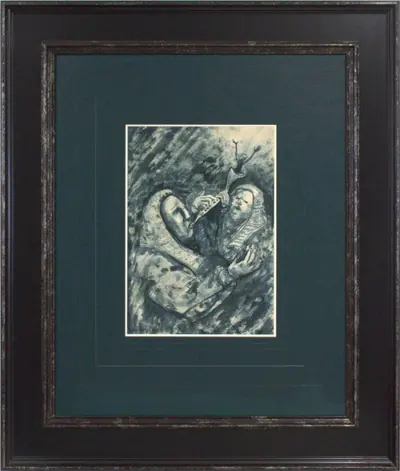
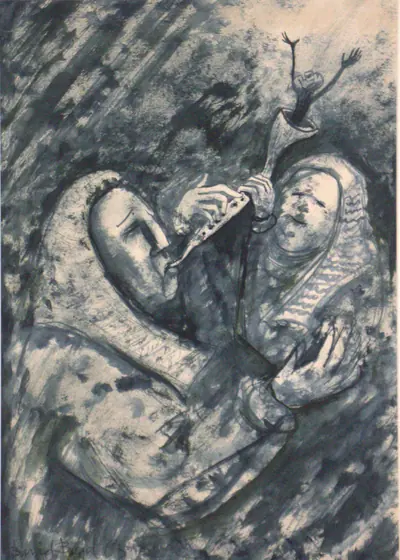
Accused Emerging from Judge's Horn
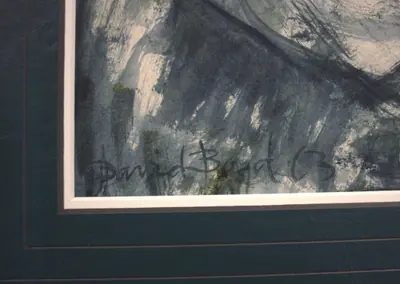
David Boyd
The Work
This piece is one of my most prized possessions. Accused Emerging from Judge’s Horn resonates deeply because of its narrative power and its emotional weight. The Trial Series always fascinated me — the moral complexity, the tension of justice, and the human stories within legal structures. I have long admired David Boyd’s ability to make law, guilt, innocence, power, and its conflicts into visual poetry. Owning a work from this series feels like holding a piece of Australia’s cultural conscience.
- Year
- 1963
- Medium
- Oil on paper
- Image size
- 345 mm x 490 mm
- Framed size
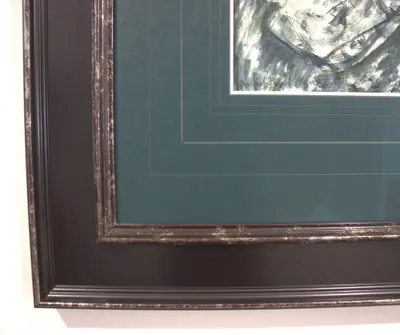
- 930 mm x 1,095 mm
- Catalogue
- 0007
Provenance
I discovered this piece on Gumtree and committed to verifying its authenticity in person. I drove almost to Sydney to meet the seller, examined the paper, age, framing, and the inscription on the back (which includes provenance written, likely by “Aunty Cass” as relayed by the seller). That familiarity with the Boyd family connection gave me confidence in the work’s legitimacy.
Ask about the price, make an offer, or simply ask a question — payment is arranged directly (bank transfer, PayID, or cash).