Anvil — Antique Buttons
The Work
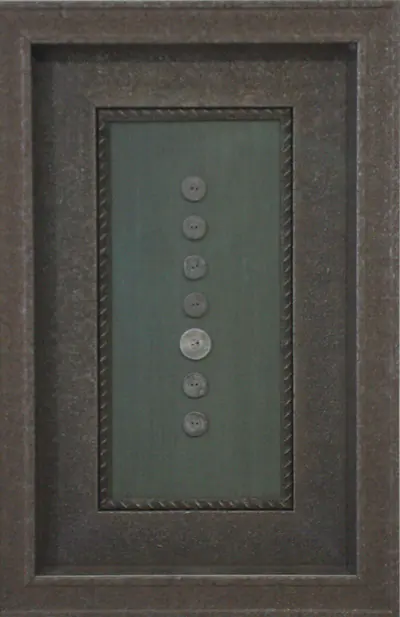
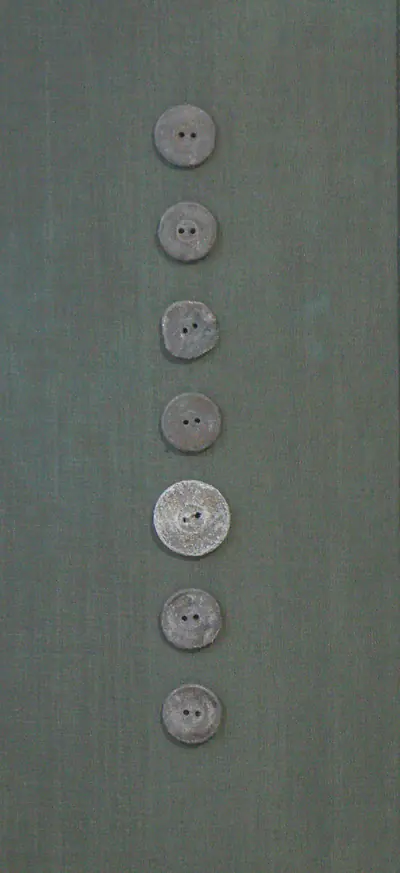
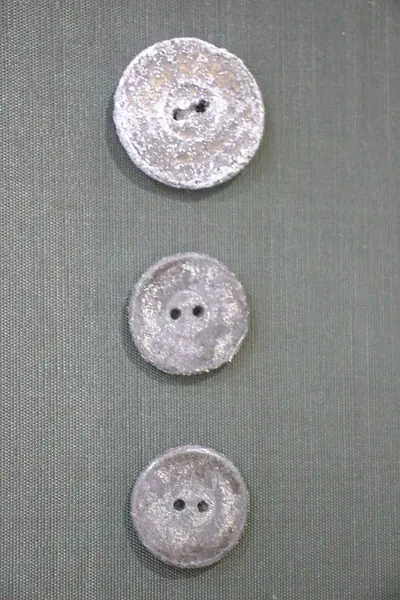
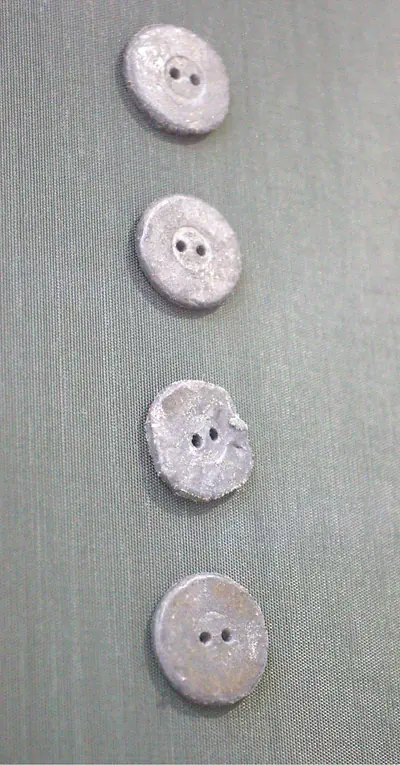
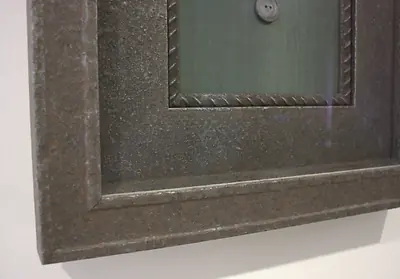
A studio piece: seven hand-cast lead buttons set on green silk, built into a triple-stacked frame with glass between the mouldings.
- Medium
- Cast lead buttons, silk backing board, timber
- Framed size
- 380 mm x 575 mm
- Catalogue
- 0039
Provenance
These seven buttons were bought on eBay roughly twenty years ago. At the time, the seller told me they were antique Roman military buttons — off a soldier's uniform. I believed it, and for two decades that's the story I told myself and anyone who asked.
Looking into it properly now, that attribution doesn't hold up. Sew-through buttons like these are a much later invention than the Roman Empire — Roman clothing was fastened with pins and brooches, not buttons. What I actually have is a set of old, hand-cast lead buttons of genuine but unknown age, sold to me with a story that was, in hindsight, almost certainly embellished to make them worth more.
I kept them anyway. This frame was built and used in the studio for years as a working sample — a way of showing clients what a stacked frame with glass set between mouldings actually looks like in person, rather than in a catalogue photo. The buttons themselves were incidental to that purpose. Whatever they are, they did their job: dozens of clients have stood in front of this frame while I talked them through stacking options.
I'm listing it now for what it demonstrably is — a well-made frame, a genuine slice of studio history, and a small, honest mystery no one's ever actually solved.
Ask about the price, make an offer, or simply ask a question — payment is arranged directly (bank transfer, PayID, or cash).