Curves
Walter Bird (London)
The Work
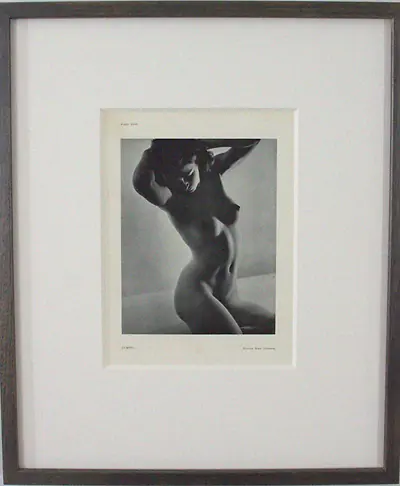
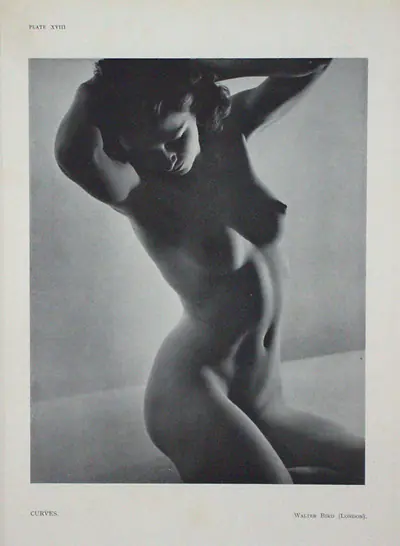
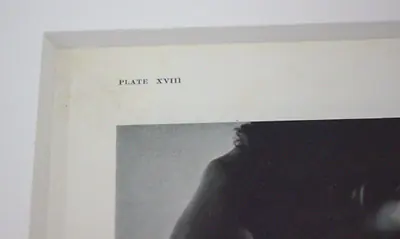
A study titled "Curves" — a nude figure captured in a twisting, sculptural pose, arms raised above the head, the body caught in dramatic light and shadow that emphasises line and form over detail. Characteristic of Bird's romantic, considered approach to the female figure, treating the body as a study in composition and light rather than portraiture.
Photograms of the Year was the longest-running and most prestigious photography annual of its era, published in London from 1895 to 1962 as "The Annual Review of the World's Pictorial Photographic Work." Compiled by the editors of The Photogram, the annual showcased the very best of pictorialist photography from around the world each year, reproduced in high-quality plates alongside critical commentary. Pictorialism treated the photograph as a deliberately composed, painterly work of art rather than a simple document — soft focus, dramatic light, and careful staging in service of mood and beauty over documentary accuracy.
- Year
- 1941 (published)
- Medium
- Halftone plate, from Photograms of the Year 1941
- Image size
- 160 mm x 205 mm
- Framed size
- 415 mm x 500 mm
- Catalogue
- 0060
Provenance
This plate comes from my own copy of Photograms of the Year 1941 — the earliest and, to me, most beautiful of a full collection of these annuals my mother gave me when I began studying photography in 1997, back when photography still meant film. Most of the annuals I owned were hardbound, but this 1941 edition was a soft-covered, aged copy, and the plates inside were extraordinary. I treasured this book for years before deciding the images were too beautiful not to be seen properly, and selected several to frame for my studio.
Ask about the price, make an offer, or simply ask a question — payment is arranged directly (bank transfer, PayID, or cash).