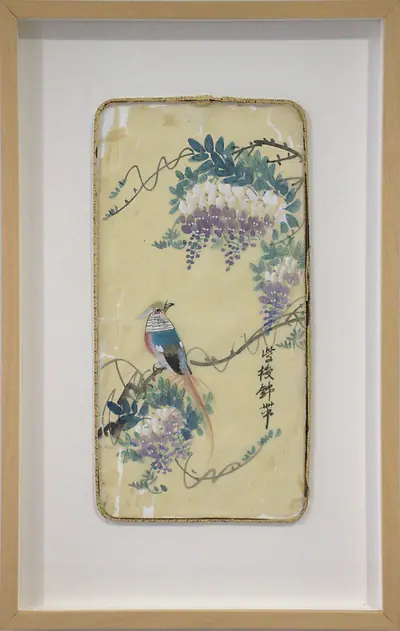
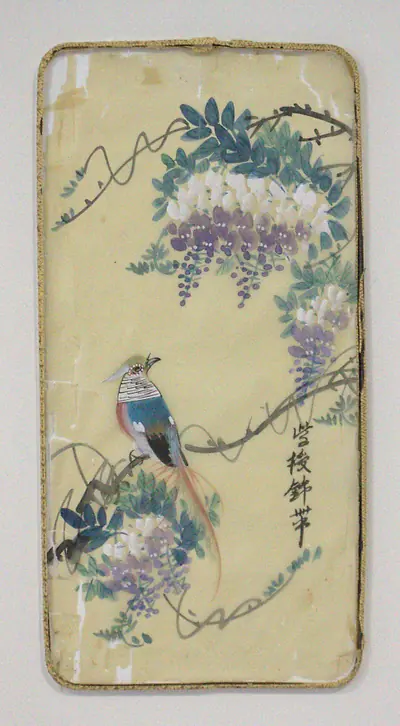
Songbird Among the Wisteria
Unknown (Chinese)
The Work
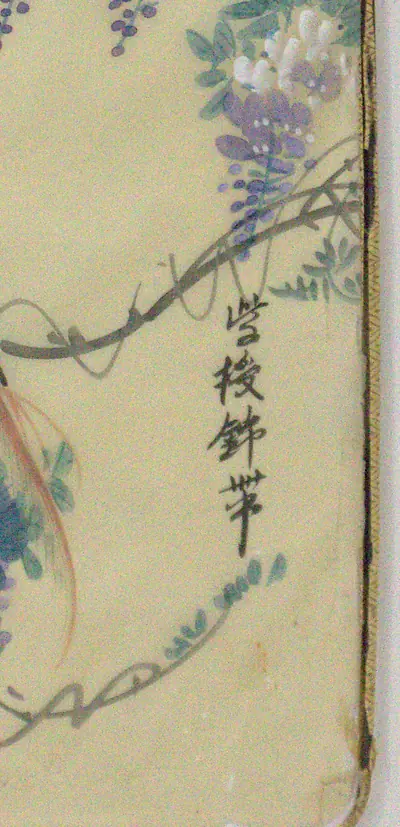
The title here is descriptive, taken from the subject matter — the inscribed calligraphy has not been fully deciphered, and this is not a literal translation.
I was first drawn to the pieces because of their beauty and felt that I could save them from ending up in landfill. I was also excited by the challenge of this. The composition — a songbird perched among flowering wisteria — is the most visually striking of the three, and even without a confirmed translation of the inscription, the piece carries real presence. Part of what draws me to these works is the mystery itself: pieces with real history, waiting to be fully understood.
- Year
- Unknown — estimated circa 1950s–60s, possibly earlier, based on materials and style
- Medium
- Ink and colour on silk
- Image size
- 190 mm x 385 mm
- Framed size
- 355 mm x 560 mm
- Catalogue
- 0037
Provenance
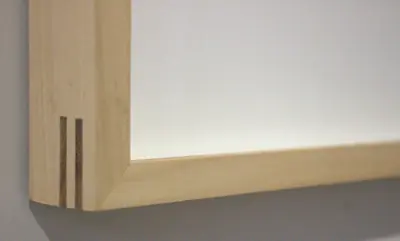
This painting was salvaged from Facebook Marketplace as part of a set of three, found together in poor, deteriorating frames. I carefully stabilised and repaired the silk using wheat starch paste — a traditional, reversible conservation method — and had it conservation-framed to protect and present it properly. Its history prior to that point is unknown.
Ask about the price, make an offer, or simply ask a question — payment is arranged directly (bank transfer, PayID, or cash).